
An architectural and technical study of the role of aluminum shading elements such as vertical fins, horizontal brise-soleils, and screens in improving building performance and aesthetics.
Role of Shading Elements in Building Performance
Direct sunlight on glass facades can raise indoor temperature by 5–10°C, doubling cooling loads and shortening the life of furniture and furnishings. External shading elements block solar radiation before it reaches the glass, which is far more efficient than internal curtains. Studies indicate that well-designed external shading can reduce cooling energy consumption by 20–40% in hot regions.
Vertical and Horizontal Fins
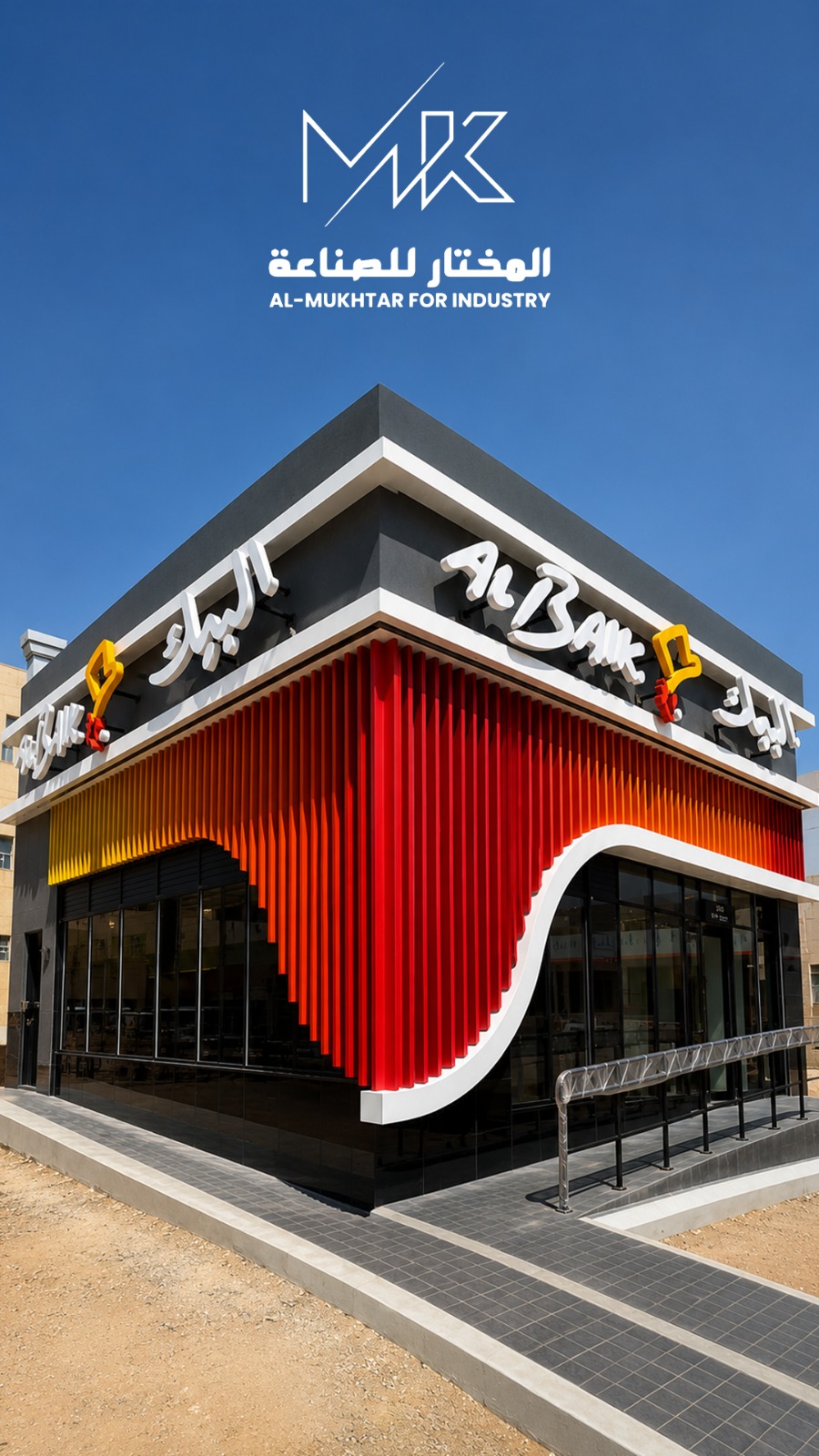
Vertical fins are most effective at blocking morning and evening sun on east and west-facing facades, while horizontal brise-soleils excel at blocking high midday sun on south-facing facades. Extruded aluminum profiles allow these fins to be manufactured in custom shapes and dimensions with virtually no design constraints. Designers often combine both types in a single facade to achieve comprehensive solar coverage while creating a distinctive visual rhythm for the building.
Screens and Perforated Panels
Perforated aluminum panels give the designer enormous creative freedom. The perforation ratio, size, and pattern can be controlled to calibrate the level of natural light admitted while providing privacy and sun protection. When the surface is painted in a dark color, the screen becomes semi-transparent from inside and opaque from outside, achieving a unique duality of transparency and privacy simultaneously.
Movable and Smart Fins
The latest technology in this field is movable fins that can rotate between 0 and 90 degrees in response to sun position, temperature, and light levels. These smart systems allow maximum natural light in the early morning, then automatically transition to full blocking at peak heat hours. Despite their higher cost, the energy savings achieved and improved indoor comfort make them an economically attractive choice for large buildings with all-day cooling needs.
Design and Installation Considerations
Designing shading elements requires a precise solar study of the site using simulation software such as Ladybug Tools or Autodesk Insight to determine optimal dimensions and angles. In installation, the support brackets must be designed to withstand the additional wind load generated by the protruding fins, with sufficient expansion gaps provided. It is also recommended to design a rainwater drainage system in horizontal fins to prevent long-term water and silt accumulation.